Category Archives: books poetry lit

You realize you had actually missed crying, like you’d miss the rain if it never fell anymore

Delicious very short piece by Kathleen Brewin Lewis over at Treehouse Magazine

“Because you think your poetry has become too full of clear skies and morning birdsong, you begin breaking your pills in half. There’s a little line in the middle of the peachy, oval medication you take each day indicating it is designed to be divided. The act makes a small but satisfying popping sound. Now you take only half of a pill per diem.

After a couple of days, a little fog rolls in, but just around the periphery. You can feel your bruises again, can finger the bumpy ridges on your scars—old friends. You’re back to arranging your words in a beat-up notebook in random coffee shops, and what you write about has an edge. Not a black hole, just an edge. You can still be chirpy with your friends and family, like they like you to be, which is why you keep taking half a pill.”

Read more

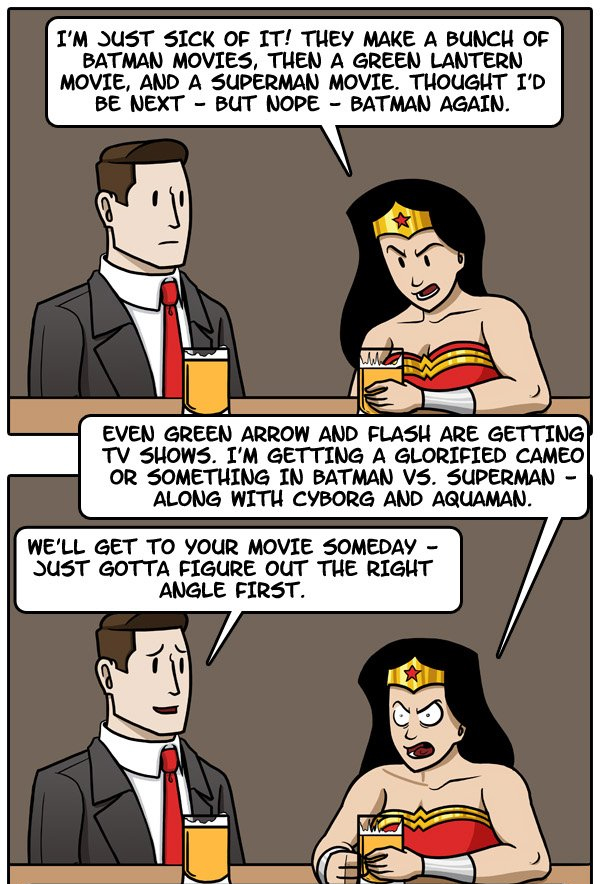
Caffeinated Links: Wonder Woman Film, the Brain Predicts Reality, Anna Akhmatova

tumblr_n53tenAdIZ1rwnp75o2_r1_1280

Comic by Julia Lepetit and Andrew Bridgman, read the rest of it here

What do you see, a bird or a fish? Fascinating Atlantic article on how the brain works and image illusions- “According to University of Edinburgh philosopher Andy Clark’s masterful 2013 summary of the state of cognitive sciencethis emerging idea about the brain is called the “bidirectional hierarchical network model.” It holds that every level of the brain is engaged in making predictions, so the expectation of seeing a house feeds down through the cortex to the eyes, which are then more likely to perceive a sloping roof instead of something else. But if something is amiss with the prediction, that information gets transmitted and the brain tries to find a better organizational paradigm for the visual input. Knowledge feeds perception and back again. There are loops everywhere strengthening and weakening according to how well they seem to reflect exterior reality” RT

Glorious read from the NYT about a meeting of two brilliant minds. “If you read the poems Akhmatova wrote about that night, you get the impression that they slept together, but, according to Ignatieff, they barely touched. Their communion was primarily intellectual, emotional and spiritual, creating a combination of friendship and love. If friends famously confront the world side by side and lovers live face to face, Berlin and Akhmatova seemed to somehow enact both postures at once. They shared and also augmented each other’s understanding.” RT

Chris Messina talks to Glamour about the future of the Danny/Mindy relationship. “That’s a good question. I’m excited. I think what we can do is, I hope it has kind of a Lucy and Ricky feel to it, where there’s such love, but they still don’t see eye-to-eye on a lot of things. They still get completely annoyed with one another—bickering and fighting—but [have] constant love [for one another]. I think we have an opportunity to show our audience some really fun stuff about couples. It has been a show about dating, and I think the other characters will go on to date and have girlfriends and stuff like that, but I think it’d be fun to show a season of how [a relationship] looks for Mindy and Danny and the silly and crazy things they do together. I think we’ll pick up with seeing them in a good place, but still wrestling with being Mindy and Danny.” RT

Today in Literary Links

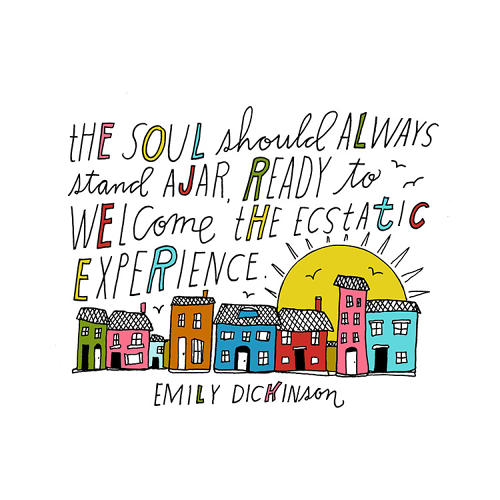
soulshouldstandajar

An Eater’s-Eye View of Literature’s Most Iconic Meals – “Du Maurier’s feast is just one of 50 tableaux collected in Fried’s new book, Fictitious Dishes: An Album of Literature’s Most Memorable Meals. It’s full of photographs, all shot from above and each one of food — literary food, to be exact. From the watery gruel inOliver Twist to a grilled mutton kidney in Ulysses to intricate “salads of harlequin designs” in The Great Gatsby, the book is a tribute to the tastes of authors and their readers.” RT

In Whatever You Are, Be a Good One, Oakland, California-based illustrator Lisa Congdon whimsically hand-letters 100 such beautifully expressed thoughts from creative thinkers, including Leo Tolstoy, David Foster Wallace, Charlotte Brontë, John Keats, Marie Curie, and Abraham Lincoln (who’s quoted in the book’s title). The cheerfully illustrated quotes range from poetic (“If a thing loves it is infinite”–William Blake) to philosophical (“Wisdom begins in wonder”–Socrates) to encouraging (“Leap and the net will appear”–John Burroughs). RT

Lastly, not literary, but did you see all the videos of Frozen characters performing famous songs? RT


Thank you Cellpoems

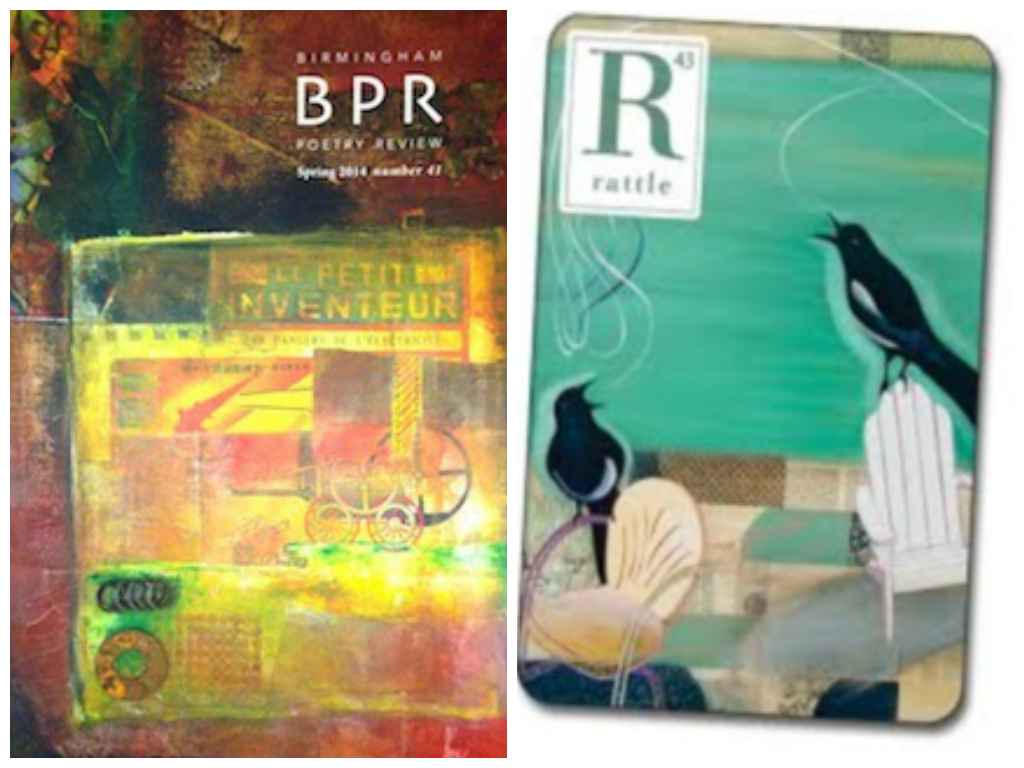
Really excited to say that my poem has been published as the poem of the week at Cellpoems! Cellpoems is one of my three favorite online publications, along with Rattle and Linebreak, so it’s a real pleasure to be included. If you haven’t yet, check them out, and consider subscribing -as well as publishing online, they deliver a short, exquisite poem once a week via text to subscribers.

Orange

I thought you would make things certain
Like a window nailed shut to the sill.

Read more 

Girl Lesson #3

You were born with a paper lantern for a
heart,
the skin lit from within, the light in
danger
of going out.

-Sandy Longhorn, Cellpoems

He Lives in an Ark and Dreams

My grandfather’s afraid of fortune and sails the world
In his handkerchief
He waves to the bottles in the sea
And reads their messages
The trenches are overflowing
It’s hard to stay positive
My grandfather’s afraid of the sky
His red kite rests on a cenotaph
My grandfather’s afraid of silence
He cradles the sound of crows
My grandfather’s afraid
Of saying goodbye
-Gabby Dodd-Terrell, age 12, Rattle

Survivor

To celebrate his just-announced Pulitzer win, a poem from Vijay Seshadri!

We hold it against you that you survived.
People better than you are dead,
but you still punch the clock.
Your body has wizened but has not bled

its substance out on the killing floor
or flatlined in intensive care
or vanished after school
or stepped off the ledge in despair.

Of all those you started with,
only you are still around;
only you have not been listed with
the defeated and the drowned.

So how could you ever win our respect?–
you, who had the sense to duck,
you, with your strength almost intact
and all your good luck.

Vijay Seshadri


SUNDAY

You are the start of the week
or the end of it, and according
to The Beatles you creep in
like a nun. You’re the second
full day the kids have been
away with their father, the second
full day of an empty house.
Sunday, I’ve missed you. I’ve been
sitting in the backyard with a glass
of Pinot waiting for your arrival.
Did you know the first Sweet 100s
are turning red in the garden,
but the lettuce has grown
too bitter to eat. I am looking
up at the bluest sky I have ever seen,
cerulean blue, a heaven sky
no one would believe I was under.
You are my witness. No day
is promised. You are absolution.
You are my unwritten to-do list,
my dishes in the sink, my brownie
breakfast, my braless day.

-January O’Neil, Rattle

6 Literary Journal Lists/Resources (Or, How to Get Your Poetry Published)


poetryjournals

It’s a hard cold world as a poet out there. Just kidding. Kind of.

In all seriousness however, it’s easy to feel lost in the world of literary journals, there seem to be simultaneously too many and too few. Here is a quick tip I recommend from the last year or so of actively hunting down and submitting work to literary journals: the first and most important thing about any journal is whether or not they publish work similar to yours. I used to naively assume that as long as you wrote good stuff you could get published: this is not the case.

Journals publish according to their tastes and generally have a particular aesthetic, and whether or not your work matches with that aesthetic is the most important factor to getting published. (Though you do, of course, need to write decent stuff). I’ve spent a lot of time sorting through lists of literary journals and filtering out dozens of good, active ones simply because my work didn’t fit their style. Honing in on the journals that take poetry like mine has really assisted me in getting published.

Having said, here are six lists to help you get up and running. I recommend slowly going through these and pulling out a list of targeted ones that match your work in some way, then applying to those. Filter out the rest as noise.

1. The CLMP (Council of Literary Magazines and Presses) has the second-largest and most reputable database online and allows you to filter for your genre. Fantastic.

2. Litline, a website for the independent literary community, has a list of 240 literary journals

3. Redactions has a list of 344 literary journals, choosing only literary journals with “Review” in their title. Fair warning; a percentage of these links are no longer active. However, I’ve found it a good resource, particularly because the journals that style themselves as “reviews” often take their work and their contributors’ work more seriously. I recommend parsing through it alphabetically.

4. Duotrope’s Digest lists 5000 literary publications. Two downsides: access costs $5/month (they used to be free but recently switched), and I have found the selection to be a huge mishmash with more misses than hits. Still, definitely a good option if you run out of resources from the previous lists.

5. Newpages offers a PDF guide to literary magazines (updated yearly) and a list of reviews of literary journals

6. John Selby has a large list of experimental poetry/art magazines all over the world

It takes work to get published. It can and should take you a lot of time to look through some of these lists and find journals that you love to read and which might like your work. But the payoff? Priceless 🙂 Go forth and conquer.

Sonogram

Little just-begun, dough rising,
sparrow northward, kicker south.
Lentil to grapefruit, you sleep-step sidewise,
turnover, pop-up, tongue in the mouth.

-Rachel Richardson, Cellpoems