Category Archives: books poetry lit
Beyond Translation
Seen from Above
Steady the freight trains
like daily missives
from other-where—
our stop on the map,
the dislocation of winter’s
bandwidth.
Steady now the icicles
freezing in their gravity,
last leaves winnowing
off the tree
and steady the people
with their clocksongs
and filled-up lives
while a few of us are dropping
away like chaff from a scythe.
Emptiness.
Pour the water.
Keep the fire lit.
Things are not as they seem.
To ring the bell
you must give your whole self
over to the bell-rope.
You must lift both feet
off the ground.
-Jennifer K Sweeney, Cave Wall
Snow on the Desert
“Each ray of sunshine is eight minutes old,”
Serge told me in New York one December
night. “So when one looks at the sky, one sees
the past?” “Yes, Yes,” he said, “especially
on a clear day.” On January 19,
1987, as I very
early in the morning drove my sister
to Tucson International, suddenly
on Alvernon and 22nd Street
the sliding doors of the fog were opened,
and the snow, which had fallen all night, now
sun-dazzled, blinded us, the earth whitened
out, as if by cocaine, the desert’s plants,
its mineral-hard colors extinguished,
wine frozen in the veins of the cactus.
* * *
The Desert Smells Like Rain: in it I read:
The syrup from which sacred wine is made
is extracted from the saguaros each
summer. The Papagos place it in jars,
Intentions (1)
In the beginning was the hand, and the hand was good
Celan says there’s no difference between a handshake and a poem
The hand has a tendency to close around the palm,
flatbread and goat cheese, prayer beads extracted at the checkpoint
The mouth may say, What am 1 doing here what am I doing here
but the hand is curious, it learns with the fingertips
My hand remembers fingering the rosary, frisson of apostasy,
enchanted circuit of witless penance
At this moment, everywhere, the hand is touching the forbidden
The head shies off but five witnesses compel the hand to tell
-Lee Sharkey, The Seattle Review
Cascade the Generations
Water is always with you. You undulate upon its lap until it breaks and you drop into waiting arms and hands. From baths to strides you swim, nourished by the sustenance water gives, just as one day
you may be drawn to its rhythmic code:
despite gravity, water ascends like faith, on bridges of fog and mist, bringing full ladles to rumbling skies that cascade in torrents down mountains and hills, filling the reservoirs of roots in fields and forests and streams, restoring over and over the oceans and seas.
Every moment, water moves forward even as it wills itself back to the clouds— much as one growing progeny within may absorb the ways of water and innately sense that she owns not the child, but rather the charge passing through her,
and the lives to whom this charge is given are renewed once again when this child reaches back and up to the parents of the parents
whose currents brought them here.
-John Middlebrook, Wilderness House Literary Review
Novel Beginnings
Ooh. I just started The Grapes of Wrath and, I’d forgotten what a language master Steinbeck is.
“To the red country and part of the gray country of Oklahoma, the last rains came gently, and they did not cut the scarred earth. The plows crossed and recrossed the rivulet marks. The last rains lifted the corn quickly and scattered weed colonies and grass along the sides of the roads so that the gray country and the dark red country began to disappear under a green cover.”
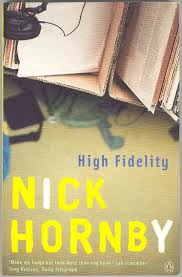
Nick Hornby’s “High Fidelity”: A Love Story
This is so so insanely good. It’s the book you want to send off immediately to your ex you still have feelings for, and your current crush, and also the book you put down periodically because you have to stop and laugh, really laugh, out loud, for longer than a minute. Sharp and funny and so brilliantly on-point with its stream-of-consciousness interior monologue about how we (human beings in general, and specifically men I suppose) think about relationships and romance and sex and the opposite sex. Not what we think when it’s daylight and your life is going well and you’re at work or talking to friends and you’re the calm stable adult, but what you think in the wild and crazy and trivial domestic moments and all the awkward mundanity and flashes of pure glory of being in a real relationship, and the adrenaline and loss of connection and magic of starting a new one.
Read it. It is hyper-articulate about love and pop culture, and hyper-aware about the peculiar quirks and stupidity and strengths of the male gender in particular.
Answering Machine
“Pat hi, it’s me, pick up. I thought you were
there, guess not. Where are you? Where could
you be, my dearest? See you tonight then,
8 o’clock at our normal place, bye my love.”
I couldn’t believe what I was hearing on my
wife’s business answering machine. I came
home early from work to mow the grass. Who
was this man’s voice on my wife’s answering
machine? I played it again, “it’s me … see you
tonight … our normal place … bye my love.”
My heart, like a racing steam engine, truly
nearly pounded right out of my chest. Where
was she going tonight and to meet whom? How
could I find out? I couldn’t ask her, she’d have a
lie ready. Somehow I needed to follow her, but
then again maybe not. Do I really want to know
the details of the ruin of my life? I’ll kill this guy,
is all I can think, I will. I’ll have to kill this guy
for taking my wife from me. The courts will
understand. Adultery is truly a disgusting,
cowardly crime. I could never hurt her of
course, but him, well I’ll simply have to kill him,
soon as I find out who he is. Then I woke up
shaking and spent the whole day wondering if I
am a good husband, even bought her flowers on
my way home. (And checked her answering
machine when she wasn’t looking.)
-Michael Estabrook, Rattle
Learning How to Write the Beginning
I’d want it to be early autumn,
a day like today, still green,
but gold around the edges,
our old yellow lab lying at your feet,
a Red Stripe beer
on the redwood table.
The sky would be as soft and faded
as that shirt you used to wear,
and it would be quiet, not even birdsong,
nothing to betray
what led up to the middle
or happened in the end.
-Judith Walter Carroll, Apple Valley Review