Tag Archives: poem

Poetry: Sunset Park

The Chinese truck driver
throws the rope
like a lasso, with a practiced flick,

over the load:
where it hovers an instant,
then arcs like a willow

into the waiting,
gloved hand
of his brother.

What does it matter
that, sitting in traffic,
I glanced out the window

and found them that way?
So lean and sleek-muscled
in their sweat-stiffened t-shirts:

offloading the pallets
just so they can load up
again in the morning,

and so on,
and so forth
forever like that—

like Sisyphus
I might tell them
if I spoke Mandarin,

or had a Marlboro to offer,
or thought for a minute
they’d believe it

when I say that I know
how it feels
to break your own

back for a living.

read more

Patrick Phillips

Poetry: Ghost Walk

We used to overturn rocks on the shore
and expose them to the belly of the sun.
I knew that some rocks should not be moved
but you picked them up to skip pebbles
and slice fountains in the sea
where they were lost
and you were satisfied
because yours had skipped the farthest
and the deepest
while mine grew steam in my palm.

Your hand in mine was sandpaper.
When you closed your fingers I was a bottled neck
with no wings flapping but the heartbeat
of one chipped stone against another.

read more at Cadence Collective

-Robin Dawn Hudechek

Poetry: You Said Is

Raffaela-Blanc-Romantica-5-82802

Romantica 1, Raffaella Blanc

you said Is
there anything which
is dead or alive more beautiful
than my body, to have in your fingers
(trembling ever so little)?
Looking into
your eyes Nothing, I said, except the
air of spring smelling of never and forever.

-e.e cummings

La Figlia Che Piange(The Weeping Girl)

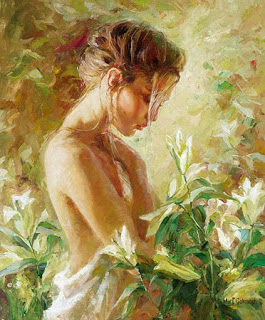
impressionistic painting girl

Stand on the highest pavement of the stair –
Lean on a garden urn –
Weave, weave the sunlight in your hair –
Clasp your flowers to you with a pained suprise –
Fling them to the ground and turn
With a fugitive resentment in your eyes:
But weave, weave the sunlight in your hair.

So I would have had him leave,
So I would have had her stand and grieve,
So he would have left
As the soul leaves the body torn and bruised,
As the mind deserts the body it has used.
I should find
Some way incomparably light and deft,
Some way we both should understand,
Simple and faithless as a smile and a shake of the hand.

She turned away, but with the autumn weather
Compelled my imagination many days,
Many days and many hours:
Her hair over her arms and her arms full of flowers.
And I wonder how they should have been together!
I should have lost a gesture and a pose.
Sometimes these cogitations still amaze
The troubled midnight, and the noon’s repose.

— T. S. Eliot

Poetry: Do Us Part by Dawn Dorland

I’ve been wanting to ask you, Do you remember what I said at your wedding? Once you’d exchanged vows by banjo and your parents cried through their speeches; after Hava Nagila, when you and your bride flew on chairs. Later, when I’d blistered my feet dancing in heels, started telling big stories with flying hands. Later, when I took pictures with people I’d only just met and planned to visit their cities—but what I said, Saul, it was later than that, when you cut cake with your darling, and she smeared it up to your eyebrows. Later, much later, when we all heard a groomsman, having crept off, empty his stomach onto the sea rocks. And we laughed, willed sickness away, went headlong into a humming numbness, the wind whipping us in June off the Maine coast, dancing hard to Beat It

read more at Green Mountains Review

-Dawn Dorland


Poetry: Leave-Taking

the trees react to colder nights by stripping naked
the meadow too

it’s as if they’re about to set off somewhere
all excess baggage is left at the gate

the sun too is a budget traveler
abandoning most of the sky
the days are so quiet now

take me with you
even if there’s nowhere to go
even if it means leaving myself behind

-Dave Bonta, Gnarled Oak

Ode to Eating a Pomegranate in Brooklyn

When I fall in love again I will have another heart

and a second set of eyes which is one way

to watch the woman you love          grow old

The story of my heartbreak started like this:

someone gave me a key that opens many doors

I traded it for a key that opens only one

I traded that one for another and that for another

until there were no more doors

          and I had a fist full of keys

At any given moment only part of the world is gruesome

There are three pomegranates in the fridge

waiting to be broken open

When I fall in love again

my beloved and I will spit seeds into the street

read more

-Patrick Rosal in Wax Wing Magazine

Poetry: Story in Which I Am Renamed Saint

It’d been so long since we’d touched, you thought I must’ve found God. I caught you in the dark watching a video: a piano on the curb letting itself be touched and touched, singing for any finger that asked. It only survived one night before men with sledgehammers shattered it to tinder, took away each metal part that sang. Each time I caught you watching this–your face glowing in the darkness of our bedroom–you told me you were learning acceptance. After all, this is the world we live in: men can be broken and made whole again. Woman with all her faults remains dismembered: body and body parts forever being torn to pieces.

read more at Linebreak

Poetry: ‘Big Sky’

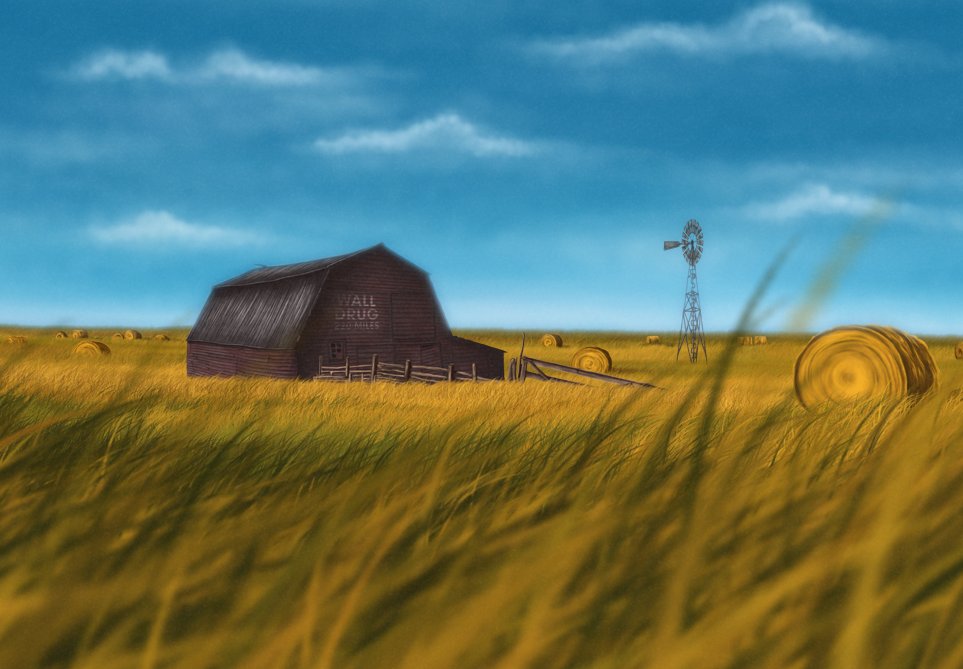
prairie sky

The Kid rode west. That was where the light went. A small house there. The rest of it below the prairie. The Kid only a small moving piece that never reached the horizon. The distance reduced into a proverb.

-Bob Hemen, Right Hand Pointing

From “Porcelain: Poem on the Downfall of my City” by Durs Grünbein

“My little bird won’t come”
—Immanuel Kant, 1803

1

Why moan about it, Johnny-come-lately? My friend,
When you were born your city was long gone.
Misty eyes don’t turn hair grey and you,
Your name: too quick for it, too green.
Seventeen years, a childhood hardly, were plenty
To erase the past. They sealed the wounds all up
In strict and somber grey; enchantment ceded to bureaucracy.
The Saxon peacock wasn’t slaughtered out of need—
Lichens, inexorable, bloomed on sandstone flowers.
They come back like hiccups, elegies: why brood, why bother?

read more at Asymptote