Tag Archives: book review

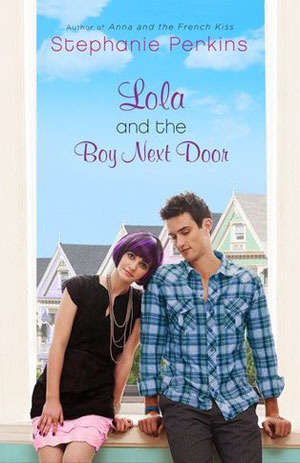
Book Review: Lola and the Boy Next Door

lola and the boy next door reviewLola and the Boy Next Door is the second book in Stephanie Perkin’s loosely-linked young adult trilogy (Anna and the French Kiss, Lola and the Boy Next Door, Isla and the Happily Ever After)… it was good stuff, y’all. In fact, dare I say I liked it much better than Anna and the French Kiss? Lola is significantly more grounded than Anna, not emotionally, but just as far as personality and life situation – I had trouble fully identifying with both Anna and Etienne in French Kiss because their lives were so thoroughly privileged. Yes, they both had family troubles which made them more sympathetic, but I’ve never been a drop-dead gorgeous teenager who gets to attend boarding school in France, and I suspect most of the rest of us haven’t either. It was all just a little too much, a little too surreal and fairy-tale-like.

All of which is to say – Lola is much more identifiable – her family’s middle-class, she works a very average job at a movie theater, she’s pretty but not absolutely stunning, and she lives in San Francisco. (Side note: San Francisco as a setting was a delight, as I visit often and love that city. It’s under-utilized as a setting for American books).

Lola Nolan lives with her parents (two married men) in the Castro district in San Francisco, in a delightful if small house passed down by her grandmother. She has a smart, driven best friend and a steady boyfriend in the form of tattooed punk-rocker Max. Life for her is pretty good…until some old neighbors move back in and her life turns upside down. Calliope Bell was Lola’s best friend until she started becoming a star ice skater and dropped Lola for not being cool enough. Calliope’s twin brother Cricket, meanwhile, the soft-spoken, awkward foil to his sister’s shining light, was Lola’s first love. Their relationship ended abruptly (and, traumatically for Lola) almost before it began however, and Lola hasn’t seen either of the Bell twins for years.

Continue reading

Book Review: The Emperor’s Soul by Brandon Sanderson

theemperor's soulThe Emperor’s Soul, Brandon Sanderson

Brandon Sanderson is easily one of the best fantasy writers alive today, and reading any book of his has the warm feeling of falling into the hands of a master. You are safe and secure in a beautifully constructed plot with compelling characters. The Emperor’s Soul, though short enough to be a novella rather than a novel, has these usual characteristics.

Shai is a trickster who has lived on her wits for as long as she can remember, until her latest and most dangerous heist yet – a break-in to the imperial palace – goes wrong and lands her in prison. Shai isn’t just a thief, however – she’s a Forger, a rare individual with the talent to change any object by rewriting its past with magic. When the arbiters, who rule the kingdom under the direction of Emperor Ashravan, offer her a bargain, she has no choice but to accept it. Ashravan has been rendered catatonic by a surprise assassination attempt, and they need Shai to change him back to who he used to be. Her talent is illegal, considered heretical by the majority of the empire, but they are desperate. Shai agrees, initially simply to placate her captors, but gradually she is pulled into the most impossible, daring task she has ever attempted: can she remake a soul?

Continue reading

Book Review: The Elite by Kiera Cass

theeliteReading the Selection series is akin to watching Pretty Little Liars: you don’t know why you’re doing it, but somehow you can’t stop. The Elite is a very silly novel that replicates all the same weaknesses and limitations of the first novel, and yet is oddly entertaining despite that, mostly because there are bits of good romance.

America Singer lives in a future America dominated by a caste system. The government is not particularly oppressive, but the caste system is fixed, with every individual being born into a caste. Eights are the bottom, and do service work that no-one else wants to do; they are poor and often hungry. Ones are at the top, the wealthy, elite, and royalty. America is born into the creative caste, Five: musicians, singers, and entertainers. When her name is randomly chosen as one of 35 potential brides for the crown prince, she is ferried off the capital and a new life of glittering ballgowns and competing for the heart of the prince. 

Continue reading

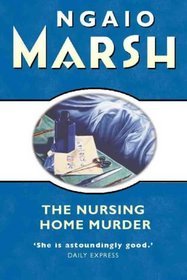
Book Review: The Nursing Home Murder by Ngaio Marsh

nursinghomemurder

The Nursing Home Murder, Ngaio Marsh

When Britain’s Home Secretary Derek 0’Callaghan dies shortly after an emergency appendicitis operation, no-one at first suspects foul play. But his wife is convinced someone killed him, and the autopsy shows poisonous levels of hyoscine, a drug used during the operation. Chief Inspector Alleyn is called in, and finds that very nearly everyone in the room had a reason to kill 0’Callaghan: the nurse was his ex-lover, the surgeon was in love with the nurse and furious at O’Callaghan for breaking her heart, and the secondary nurse is a Bolshevik sympathizer who believed 0’Callaghan was ruining the country.

This is Ngaio Marsh’s third book in the Alleyn series, and it’s not very good: it’s neither a good Marsh novel nor a good mystery in general. The plot is relatively complex; multiple suspects, all with opportunity and good motives, and about a dozen red herrings appear, in particular the victim’s sister as a suspect. It’s also difficult to keep track of the exact order of events during the operation; 0’Callaghan receives three separate injections, all administered by different people – all suspects – and none of this part becomes clear until Alleyn stages a reconstruction of the operation toward the end of the novel. Had Marsh placed this reconstruction toward the beginning, the actual events, and the stakes at play, would have been much clearer and the reader would have been given more reason to be invested. As it is, it is not infrequently confusing, and this isn’t helped by the majority of the suspects being rather stupid, uninteresting people, drawn by Marsh with one-note characterizations. Sir Robert Phillips, the surgeon and an old friend of the Secretary’s, is the only interesting one, and even his purpose in life is reduced to a blind infatuation with one of the nurses.

All in all, this is perhaps the weakest Marsh I’ve read so far. The characteristics that would make her later books so satisfying – her incisive character sketching, the warmth and humor of Inspector Alleyn, her ability to turn a plot on a small, overlooked detail – are only faintly present – the stirrings of a great writer trying to break through inexperience. Her later Alleyn novels show an incredibly developed confidence and prowess for plot; this is competent but dull.

Book Review: A Trick of the Light by Louise Penny

atrickofthelight

A Trick of the Light, Louise Penny

If you’re a mystery fan, hopefully you are already aware that there’s scarcely anyone who can touch Louise Penny in the art of modern mystery-writing. Jacqueline Winspear and P.D. James both write well-crafted, occasionally brilliant novels, but in her emotional astuteness, playful style, and superb plot-building, Penny is the only mystery novelist alive today who I find to be a worthy successor (at her best) to Agatha Christie. In particular, I think that Ms. Christie would have been pleased to read a writer who could not only craft chilling, dark plotlines that unflinchingly trace the lines of human evil, greed, and envy, but who also – as Christie almost invariably did – returns to a place of distinct hope at the end of each novel. Human beings are fallen creatures in Penny’s work, but they are also creatures of light, capable of forgiveness and of loving persistently in the face of a dark world. Penny always returns to characters at the end of the novel their humanity, no matter how dragged into the dirt they have necessarily been over the course of it, and for that, I love her.

Continue reading

Book Review: The Selection

selection cvr

The Selection, Kiera Cass.

America Singer lives in a futuristic America in which, after a series of World Wars, society has been restructured as a class system. There are eight castes who each perform different duties. America is a 5, the artistic case, who earn their money by performing during national holidays and for the wealthier families. Intermarriage between castes is highly frowned upon and America’s mother hopes that she will raise their status and support them financially by marrying into a caste above her. America, however, has been in love with Aspen, the son of a family friend and a caste below her, for her entire life.

The country is governed by a regency and the state announces that it’s time for The Selection, an event in which 35 girls are chosen from a lottery and one of them selected by the Crown Prince to be his bride. America reluctantly enters the drawing at the pushing of her mother, and is shocked when she is chosen. Soon, she and 34 other girls are swept into the palace to live a life of luxury while getting to know the Prince.

This is a light and immensely readable book – I read it in two sittings flat. America is an immediately engaging heroine, mostly the story is told in first person and Kiera Cass makes America spunky and blunt but with believable fragilities and small selfishnesses that make her human. Oddly, however, it’s the first half of the book that’s the strongest – America, her relationships with the various members of her family, and her relationship with Aspen are all well-developed. The romance that develops in the second half, though….there’s exactly enough good romance in this book to make one compelling relationship, not too.

Cass attempts to set up a love triangle between America, Aspen, and Prince Maxon, and several of the scenes with Aspen and Maxom, respectively, are very compelling – but wholistically Aspen and Maxon each feel like half of a fully-rounded character. Aspen is too simple to be completely interesting – the two main drives of his life appear to be to survive and to be with America if he can, and he doesn’t have the complexity to grapple with the changes in America while she lives at the palace, or the broader social and political forces in the country. While Maxon adheres too closely to that “white prince/knight in shining armor” pattern – he’s painfully nice, formal, and innocent for much of the novel. Both male leads would have been more interesting if they had more bite to them, a little more of a rough edge.

Continue reading

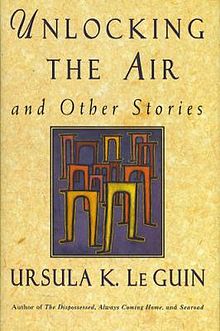
Book Review: Unlocking the Air and Other Stories by Ursula K. LeGuin

UnlockingTheAir


Unlocking the Air and Other Stories

I read only three of these stories and couldn’t finish. There’s an emotional turbulence running through each of these stories that reminds me of both A.S. Byatt and Ray Bradbury, and left me with a profound sense of unease. A strangeness haunts these stories, both metaphorical – as in the tale of a miniature, almost-but-not-quite dollhouse a professor builds as a stress reliever (a microcosm of his world) – and literal, as in the tale of a family who wakes up one day to find their water running red. This is Ursula K. LeGuin at her most skilled – she writes with every bit of A.S. Byatt’s erudite passion about people, intellectual choices, selfishness, and how said choices lead people inevitably into various social and economic classes, where they remain for the rest of their lives. The stories are impressive, literary, and gripping. But I did not like them. The effect they left was both unpleasant and strong, and I’ve found life to be too short to spend my time on that. I am putting this down without regret.

All Rainbow Rowell Up in Here

XTINEMay aka Christine, one of the most popular book vloggers on Youtube, has a hilarious and spot-on discussion of Attachments, Rainbow Rowell’s first (and my least favorite of her books).

Speaking of Rainbow Rowell….I am very late with this but she’s writing a graphic novel!!!!

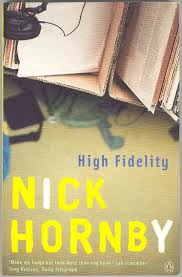
Nick Hornby’s “High Fidelity”: A Love Story

highfidelitybook

This is so so insanely good. It’s the book you want to send off immediately to your ex you still have feelings for, and your current crush, and also the book you put down periodically because you have to stop and laugh, really laugh, out loud, for longer than a minute. Sharp and funny and so brilliantly on-point with its stream-of-consciousness interior monologue about how we (human beings in general, and specifically men I suppose) think about relationships and romance and sex and the opposite sex. Not what we think when it’s daylight and your life is going well and you’re at work or talking to friends and you’re the calm stable adult, but what you think in the wild and crazy and trivial domestic moments and all the awkward mundanity and flashes of pure glory of being in a real relationship, and the adrenaline and loss of connection and magic of starting a new one.

Read it. It is hyper-articulate about love and pop culture, and hyper-aware about the peculiar quirks and stupidity and strengths of the male gender in particular.

Spotlighting Great Book Reviews: Girl with a Dragon Tattoo

Girl-Dragon-Tattoo_300An oldie but a goodie – Victoria at Eve’s Alexandria reviews Girl with a Dragon Tattoo. Having read the book, I couldn’t agree more with the below –

“Perhaps that is what attracts readers to Larsson.  It is not his labyrinthine plotting or cunning, but his startling simplicity.  There is no mystery in The Girl with the Dragon Tattoo; there is just savage, terrifying, ordinary violence.  It is a revelation no more or less obvious than its other proposition,  that international corporations are exploitative and that financial markets are corrupt.  It is an idea we are familiar with, but it is a slumbering sort of idea.  It snoozes away in the back of our minds, and if prompted we repeat it without really confronting it.   The point Larsson makes is that we must confront it.  We are all like Blomkvist, in the midst of real crimes we spend our time reading crime novels.  We’re horrified by the fiction but ignorant of the realities (and thus implicated in its perpetuation).  Shame on us, he says, we should be more honest with ourselves – this isn’t fiction, its the real thing.  To write a novel with such a ‘message’ is both the height of irony and of moral outrage.” RT